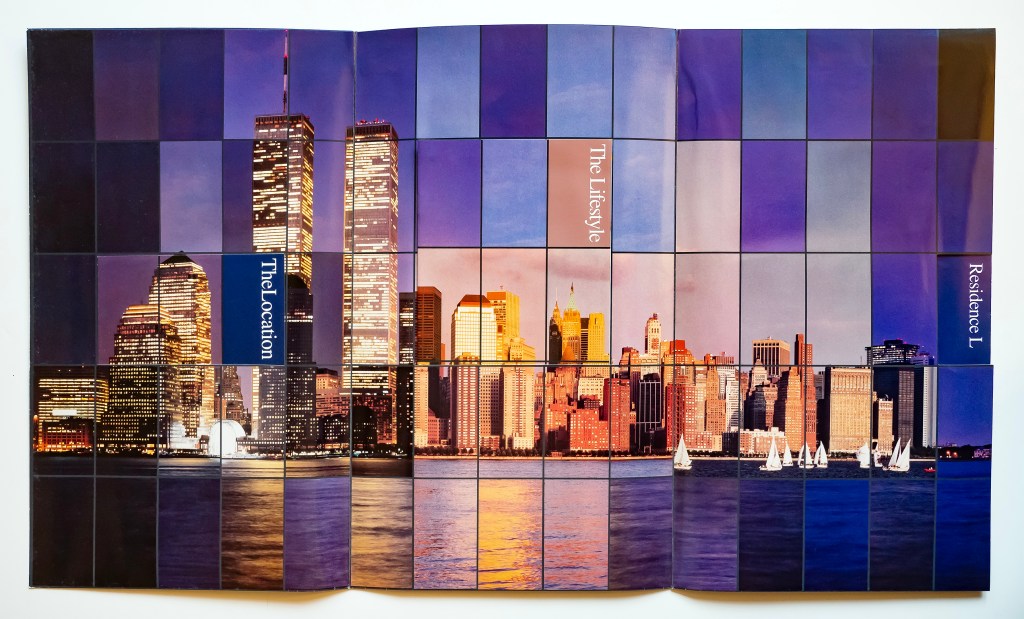
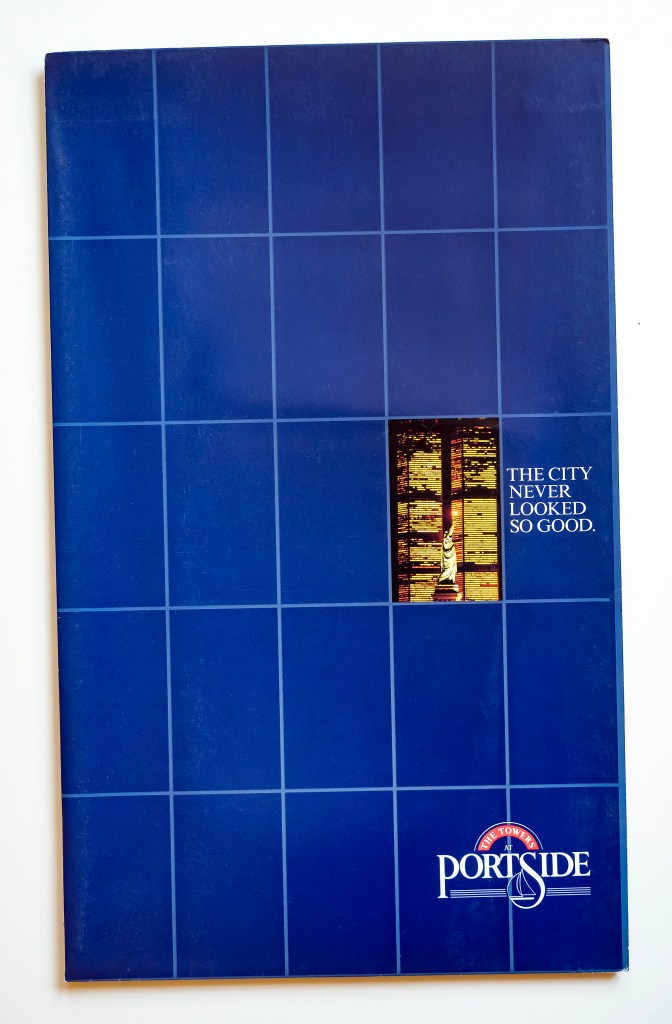
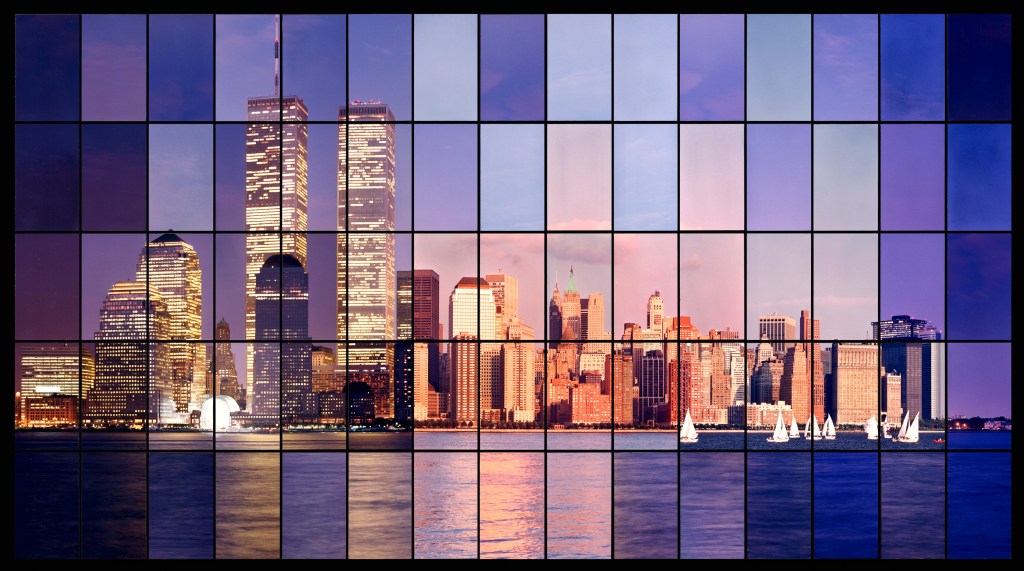
The Portside Towers Apartments in Jersey City boasts a pretty spectacular view of the lower Manhattan skyline, and the firm that hired me decided that was the main selling point of this new residential development. Not to mention the fact they hadn’t actually built it yet, so there was nothing to actually photograph…. This collage was a departure from my typical composite panoramic style. Instead, I created this image by making several exposures of the entire scene using a large format camera from morning till nighttime. I then constructed a physical collage using sections of the different prints, creating a mosaic of the various timeframes.
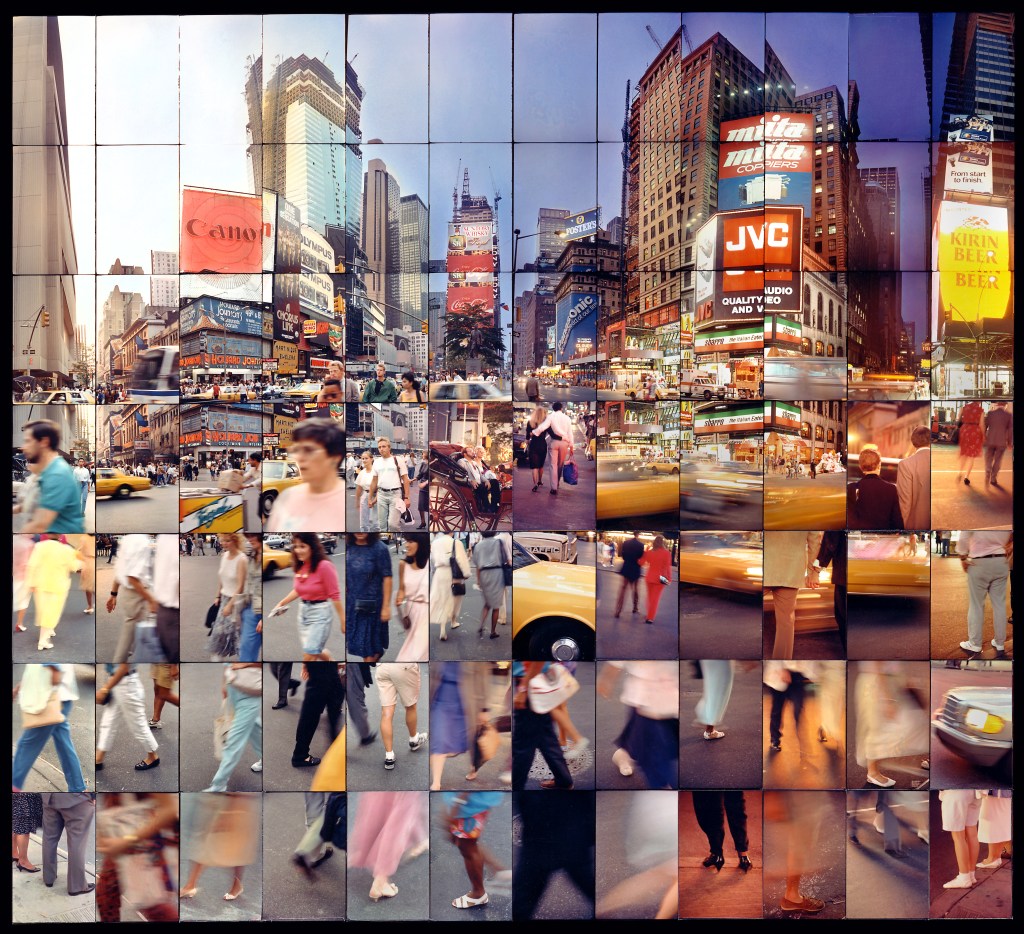
The World Financial Center was recently completed, and the World Trade Center was still standing…. I also took a bunch of ’normal’ pictures of the neighborhood for the inserts, which was not normal for me, but I was getting good at fooling people about my normal photography skills by this point….
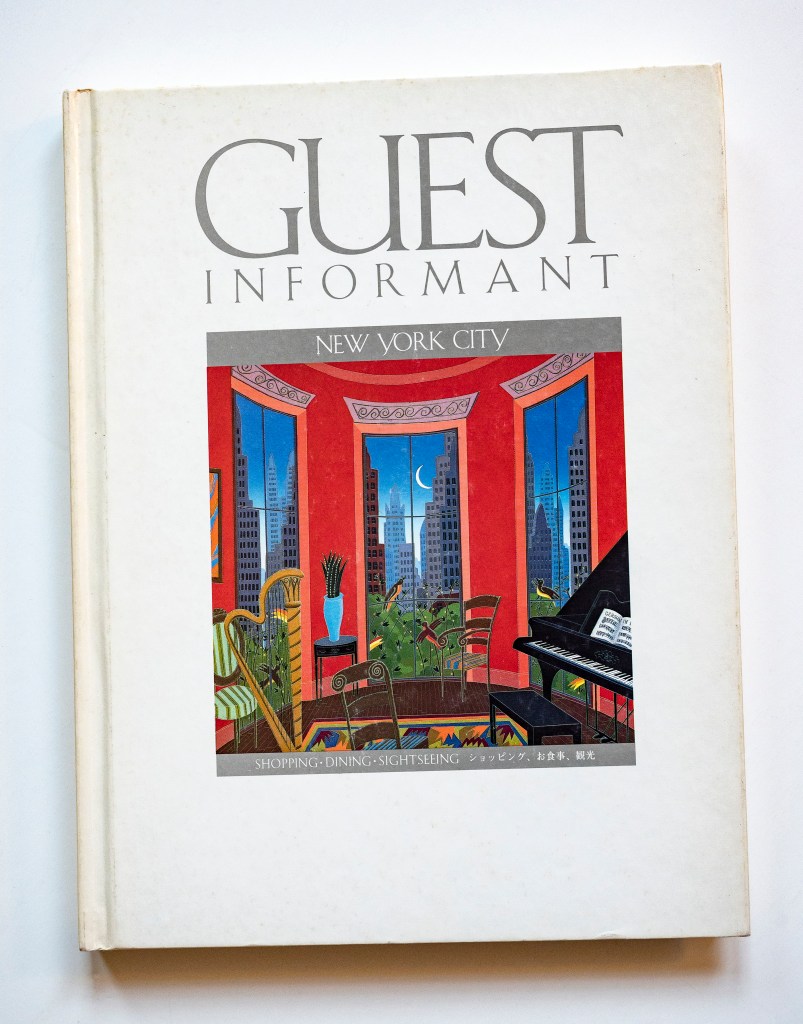
Guest Informant publications were luxury full-color hardcover city guides published annually for rooms in upscale hotels across the country. I did work for the NYC and LA versions.
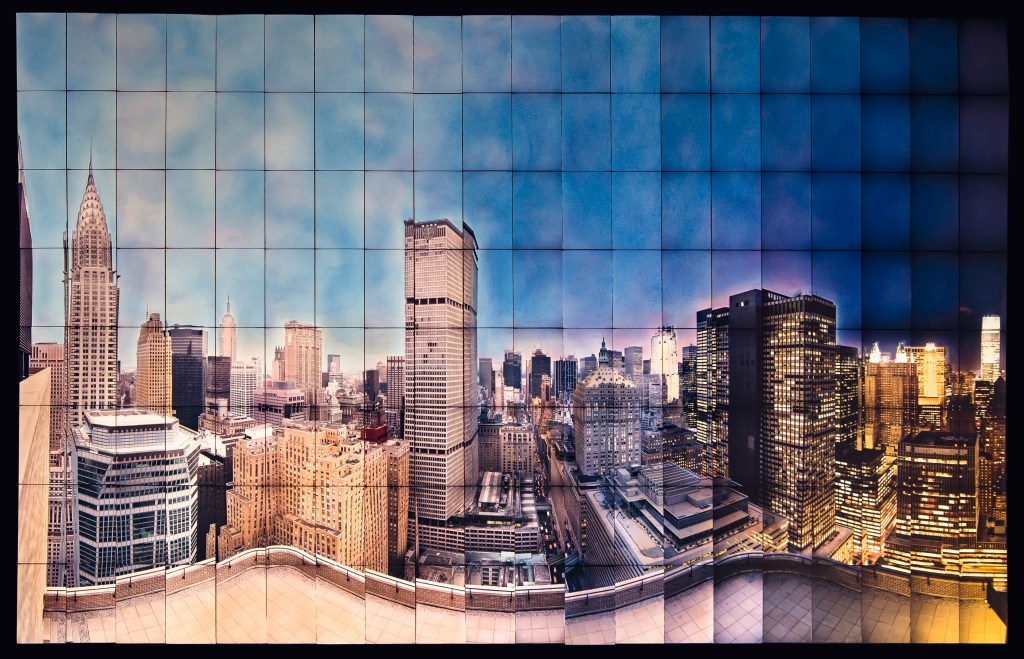
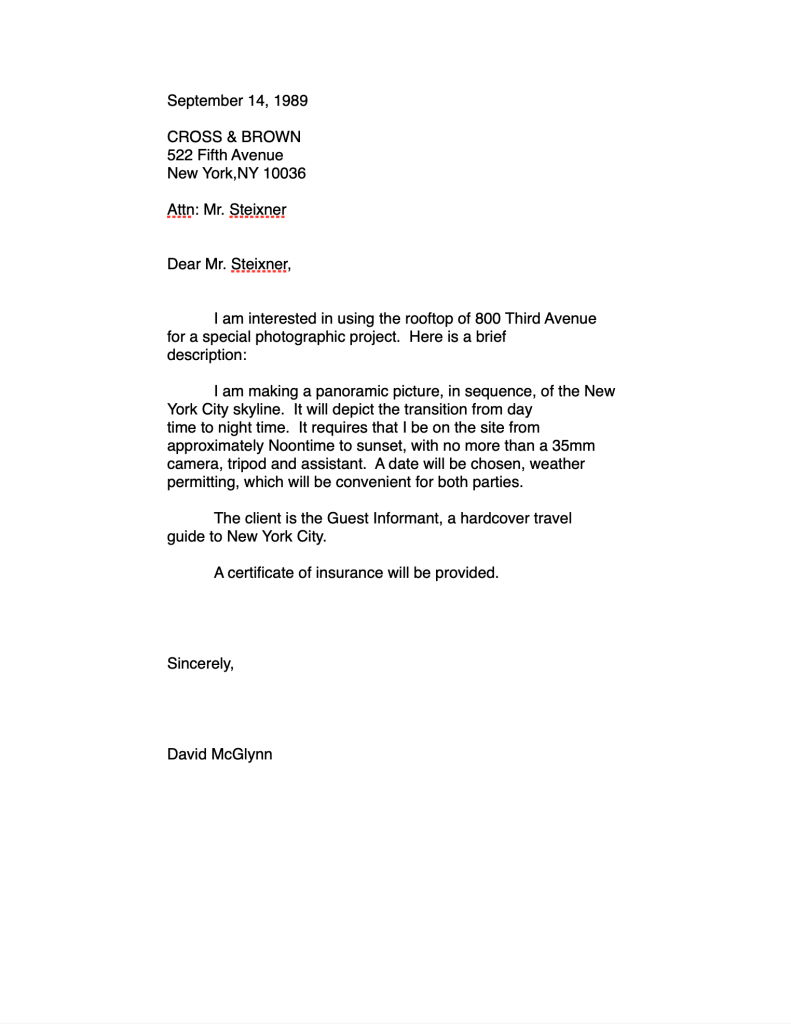
For both of these collages here I ventured into some hand retouching and painstaking replacing of images on the contact sheets themselves, in this pre-digital era. There’s quite the story associated with the skyline image. In an era before 9/11 it wasn’t that hard to get up onto rooftops to do some photography. I had secured permission for a rooftop with a perfect vista on Third Avenue in midtown NYC, along with a backup rooftop a few blocks away. I already had a few of my ‘daytime to nighttime’ transition collages under my belt so I confidently arrived at the scene, and proceeded to set up my special rig that I had devised over time to help make these composite panoramas.
In this case I was also using a telephoto lens. I didn’t really have a lot of equipment, but I guess the rig looked a little… unusual. Unbeknownst to me and perhaps to the building management was: then-president George Bush Sr. was scheduled to come up Third Avenue by motorcade into the area that very day. Out of nowhere, bursting thru the elevator bulkhead door, I found myself surrounded by 5 NYPD officers with guns drawn. “WTF are you doing here?!? What the hell is this thing?!?” I explained as quickly as I could exactly what I was doing and they stood down and explained to me that there were a couple of secret service sharpshooters on neighboring buildings both with a bead on me, in the off chance I was there to assassinate the president with my mystery rig. I was quickly escorted off the rooftop, no harm no foul, and zipped over to the backup location and somehow managed to get this version done. Not bad for plan B!
MIDTOWN DAY-TO-NIGHT 1990TIMES SQUARE DAY TO NIGHT 1989
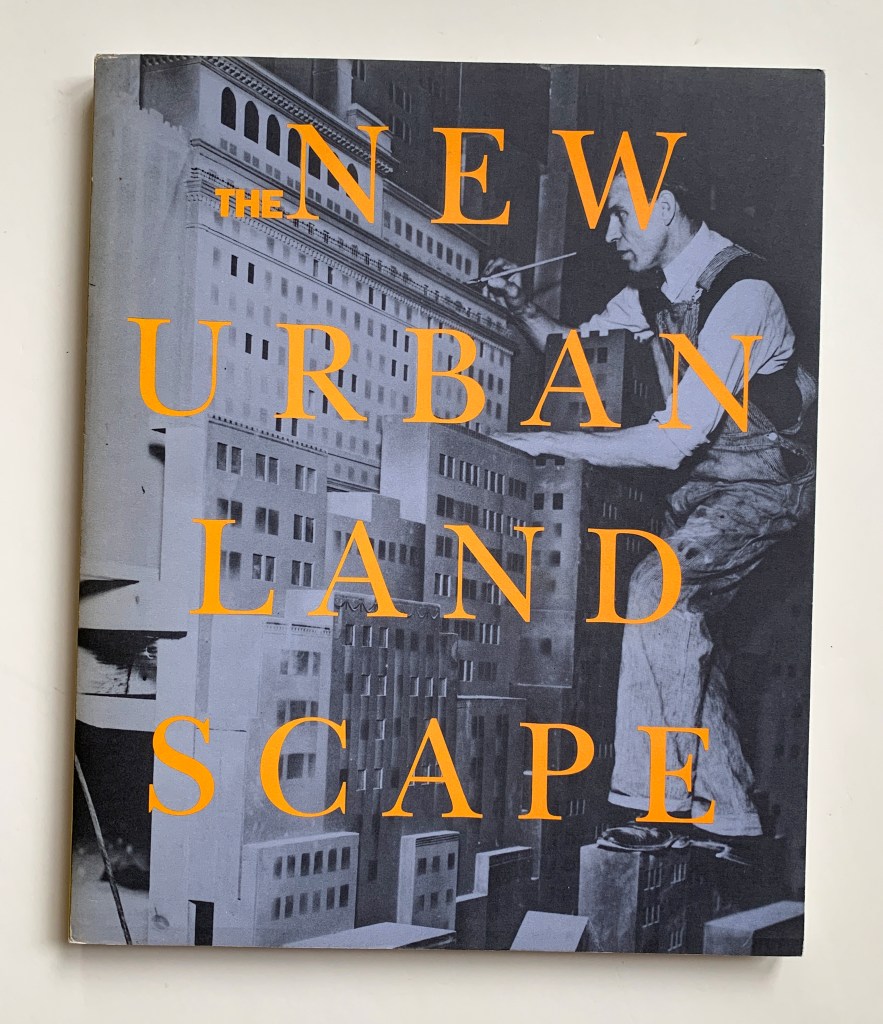
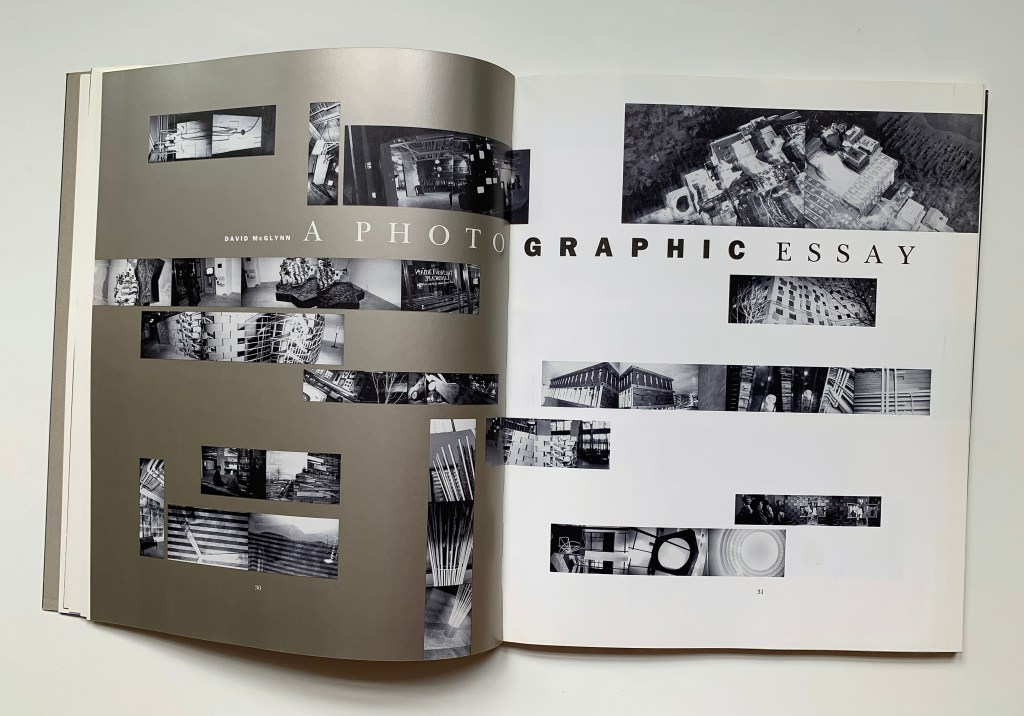
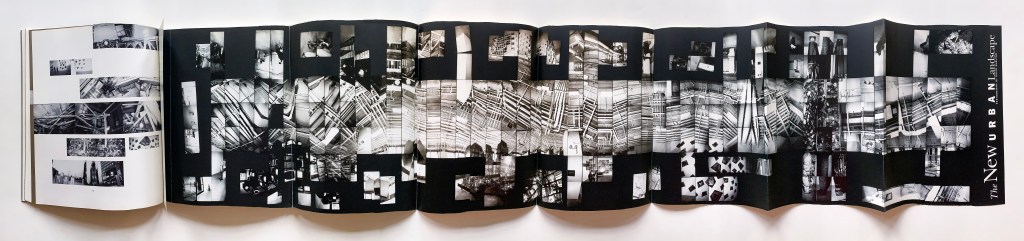
By the late 80’s I had worked a couple of times for the ultra-hip NYC firm Drentell Doyle Partners. One of their big clients was World Wide Plaza, for which they did seemingly everything, at least the cool looking stuff. Found online: ‘Created to document an exhibition titled “The New Urban Landscape,” held at New York’s World Financial Center in 1988, this catalog contains a bewildering collection of arcane stories, cryptic essays, impressionistic photographs, and even a five-foot fold-out collage. The exhibition attempted to address the ever-changing urban environment through images, music, and dance and appears to have been a great success’.
The show was part of a larger celebration of the completion and opening of the World Wide Plaza, and featured many well known contemporary artists and architects, who were invited to ‘Create visual works that addressed issues about the “city,” both positive and negative’. So many people had a finger in this pie it is hard to tell who actually curated it. Participating artists included Nam June Paik, Joel Otterson, Vito Acconci, Richard Wentworth, and olde pal Jon Kessler, among many others. I was thrilled to be asked by Bill Drentell and Stephen Doyle to do my own photographic interpretation of the exhibition. In the catalog they published a four page photo essay which contained over 30 of my mini collages, plus the 5 foot long pull-out poster extravaganza.
Editors note: this was a strange moment in my art making – I was growing increasingly bored with my gridded composite panoramic approach, and was experimenting with simpler, rougher ideas, shooting in black & white film, printing on color paper, and adding subtle color shifts in the darkroom. The show itself was housed in the North Gatehouse, which was still under construction. What struck me immediately upon entering the space was how the art fit (blended?) so well in the raw, unfinished space, in some instances it was not immediately clear where some works ended and the space began… and what seemed to hold it all together was this massive linear web of pipes, tubes and conduit running across the unfinished ceiling of the entire space. It became the unifying ‘meta’ motif for the pictures I made, in particular the collage. I saw it all as one unified entity…. I still don’t know exactly how I feel about this work, the whole enterprise was a bit of a punkish fever dream. I certainly was not yielding to any representational photography impulses, that’s for sure. DDP loved it; they had a framed print in the offices back then. Fortunately for the artists, they had another photographer taking real pictures….
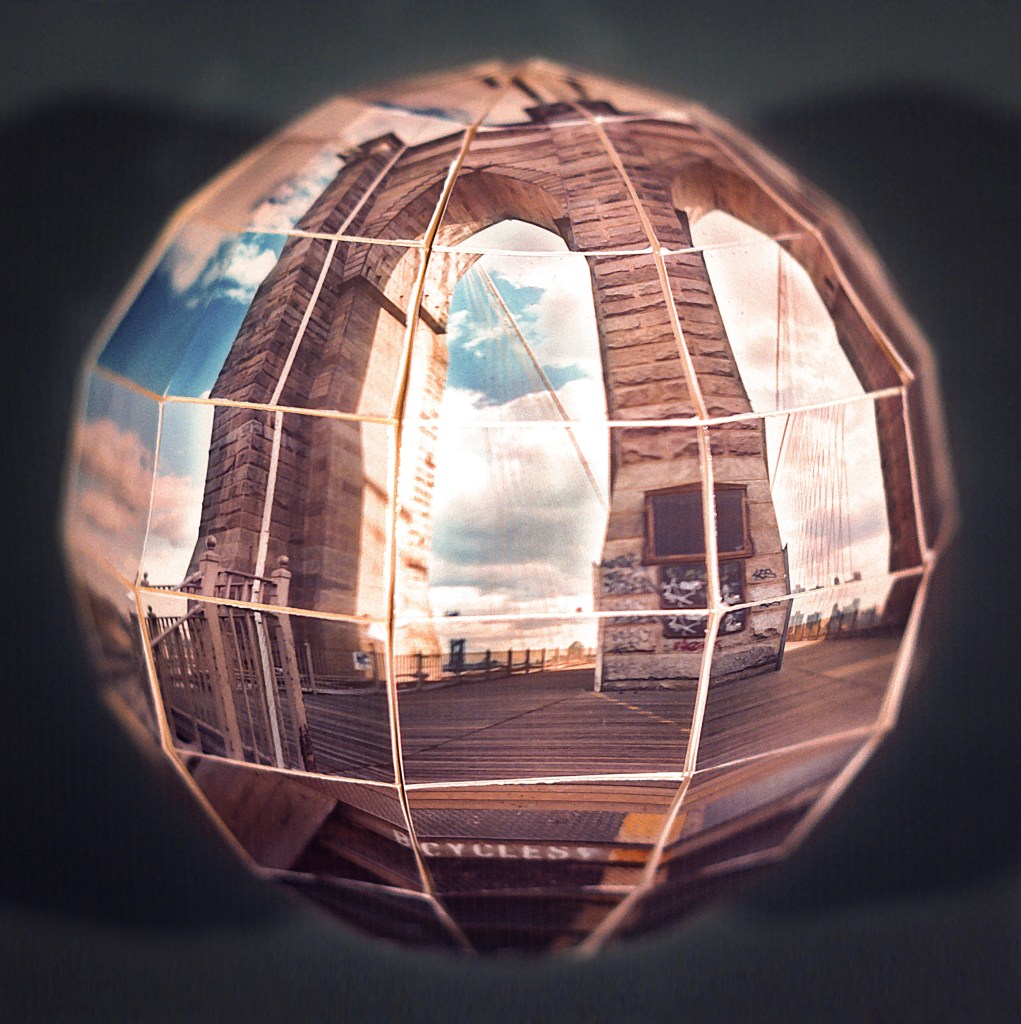
In 1982 I created the Brooklyn Bridge composite panoramic collage. Measuring 9” x 16” it is composed of 80 35MM frames. It became one of my most popular images, I’ve sold or gifted more of these than any other collage of this kind, including a few enlarged versions. It is in the collection of the Brooklyn Museum, NY. In early 1983 I decided to print a postcard of the image, as it was the 100th anniversary year of the completion of the Great East River Bridge. The plan was to do a promotional mailing, and use it as a ‘leave behind’ card when dropping off a portfolio for review.
On Sunday March 27th of that year I received a call from a close friend, who in the course of the casual conversation said “did you happen to see the Times today? I wouldn’t bother, too depressing” I thought it odd, but whatever. Then my brother called a little later and said less subtly: “did you see the cover of the Times magazine section today?? Some guy ripped off your Brooklyn Bridge picture!!” Artist David Hockney, who had begun experimenting with his own version of photo collage, had his Brooklyn Bridge photo collage on the cover of the NY Time magazine section, as part of an article about the Centennial. Also created in 1982, It was taken from the exact same vantage point as mine, looking at the same stanchion with the same graffiti covered plaque. It was uncanny, and unsettling to see. Now, some 40 years later, I am able to put it all in some sort of perspective. But back then it was a shock to the system, and it had some real ramifications. At that time in my life I was hustling my portfolio of these collages everywhere. And from that moment onward came the familiar refrain: ‘Wow, this looks like David Hockney’s work!’ It was an inescapable phenomenon that I eventually had to accept, in spite of the fact that I was doing similar collages since 1979. There was little I could do against a public perceptual juggernaut like that. My best effort was to create a ‘Pre-Hockney rubber stamp(!) with which I stamped the postcard and 35MM slides of the Brooklyn Bridge image, (as part of the endless cycle of sending ’20 slides of your best work’ to countless galleries, slide registries, calls for entry, etc.)
On the positive side, within a short amount of time there was great interest in photo collage work in general, because, as this ivory tower artist soon discovered, I was not the only person creating photo collage with David Hockney simply coming along later. There were dozens, hundreds of photographers and artists, stretching back in some cases decades, working on photo collage of some sort or another. And out of nowhere galleries and institutions were mounting group shows of collage photography, where many otherwise unknown artists (along with some well known, like Hockney) were in gallery and museum group shows around the country, I was in several, and in at least one case my Brooklyn Bridge was on the cover of the catalog while Mr. Hockney languished inside the catalog. Take that!
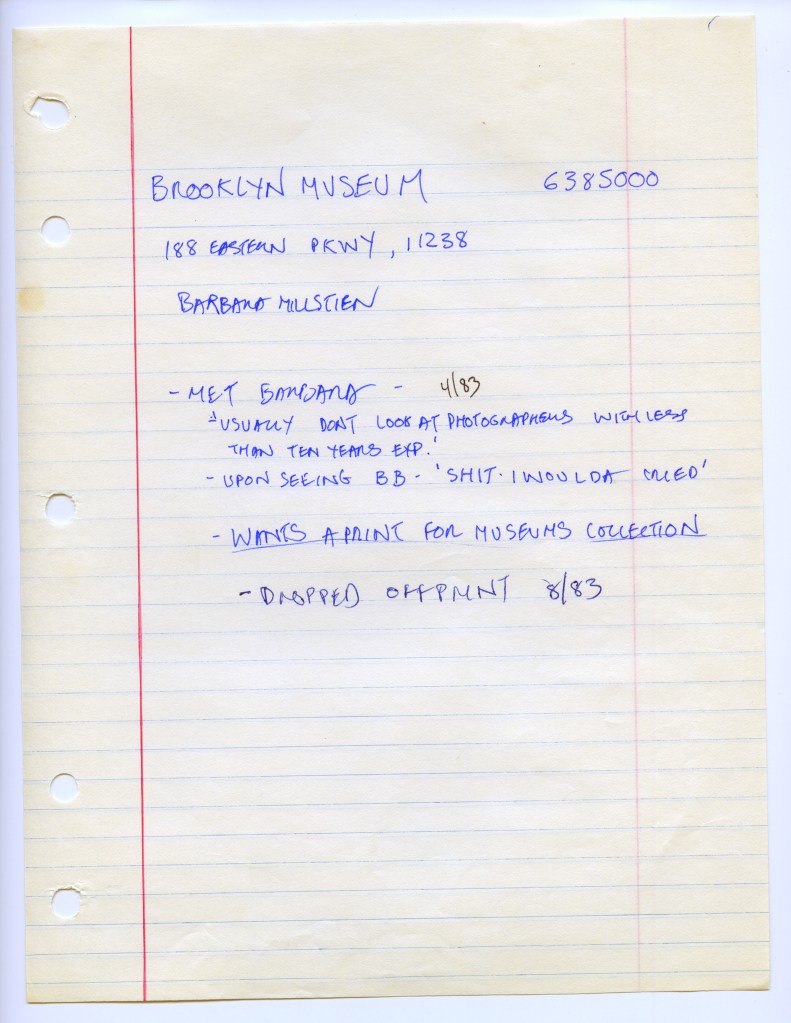
In April of that fateful year, I managed to get an audience with the late Barbara Millstien, the curator of photography at the Brooklyn Museum. While talking about the Hockney situation she said “Shit, I would have cried”, acknowledging the inescapable permanent PR problem I had. Nonetheless she accepted a print for the collection for which I am eternally grateful.
So there are two takeaways for me coming out of this situation. The first I have always known, and that the ‘market’ cannot endure more than one person/style at a time to occupy the main spotlight, and any similars are kept at a distance, thru indirect but inescapable forces. There can only be one Rothko, one Picasso (sorry Braque!) one Jackson Pollack. I mean, just imagine if there was another artist trying to do similar drip paintings at the same time. It just doesn’t happen. There is only one Jerry Lewis (sorry Sammy Petrillo!). C’est la vie. But the other takeaway points to the uncanny business of how David & David both did the same basic thing, within feet of each other’s location, within months of each other’s execution, completely unknown to each other. This led me down various rabbit holes where I learned all about synchronicity, simultaneous invention, and the Hundredth Monkey effect, etc. Instead of immature and misplaced resentments and jealousy, I am instead happy and proud to have been a part of the photo collage moment, one monkey among many.
BROOKLYN BRIDGE 1982 – 16″ X 20″ C Type Contact Print, Ed. 10
Postscript: In 1983-84 I was working at Cafe Luxembourg, the uptown sister restaurant of the Odeon, both owned by Keith McNally, and both frequented by the NYC art cognoscenti. Curator and critic Henry Geldzahler, a close friend of David Hockney, was a frequent guest. I waited on him one night and struck up a brief conversation with him about the Brooklyn Bridge, whereupon I gave him a postcard (I was alway loaded to bear with promotional materials, wherever I was. Be sure to ask me one day about how I pitched the one and only Donald Trump in 1983 at the Wollman Skating rink!). He promised he’d show it to David next time he saw him, which he did, and actually reported back to me about it. I honestly forget exactly what he said, but at one point, Henry looked up at me and simply said/asked “No bitterness?” I remember being flummoxed. I was too young and still chafed at my ‘permanent PR flaw’ I never asked for, so I don’t remember exactly how I responded. But now, 40 years later and with much gained wisdom and maturity, I can honestly say: ‘no bitterness’. Gratitude instead.
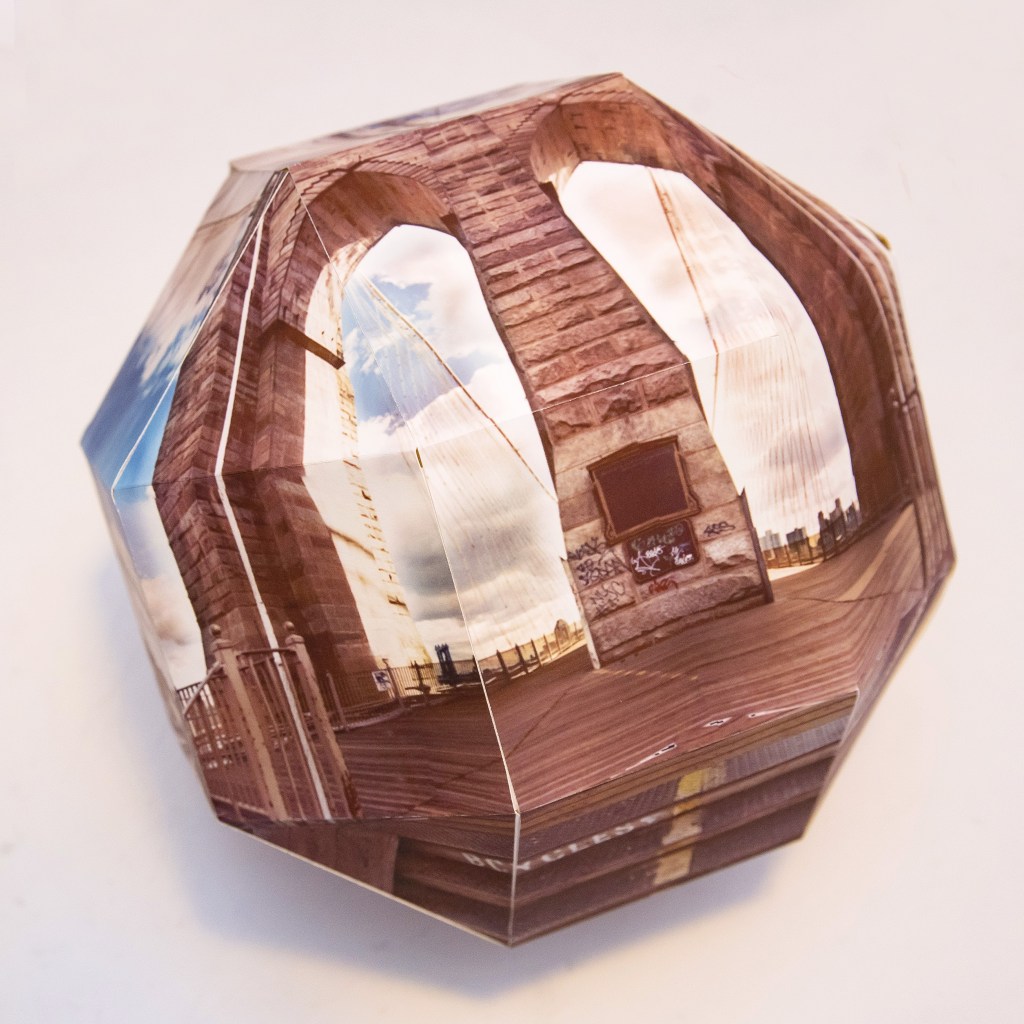
Added note: From the very beginning of creating these biaxial 360° x 180° collages, i started developing plans for converting them into 3D spheres, initially as panels adhered to Buckminster Fuller type geodesic domes. I eventually opted for my own design and made a maquette version of the Brooklyn Bridge. Of course the idea of doing large inside-out spheres was a logical extension of that, to create a 360° x 360° full surround environment. Looking back it was all a precursor to VR environments, and as digital media became prevalent, I imagined converting these early images into ‘Vintage VR’, which I eventually did (see links)
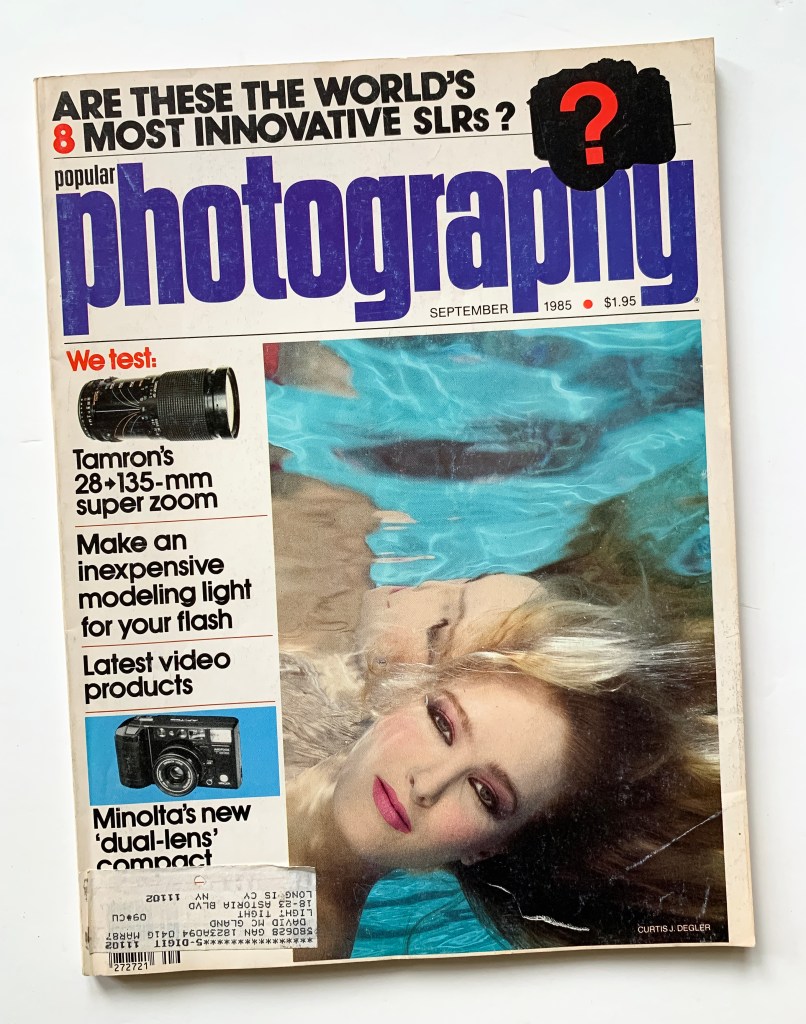
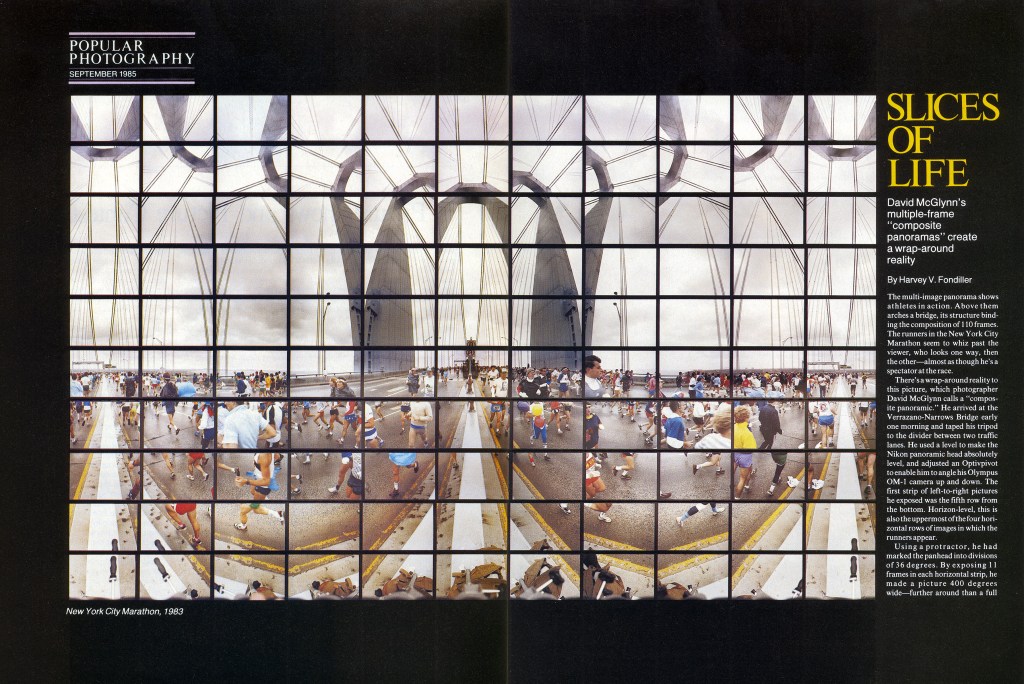
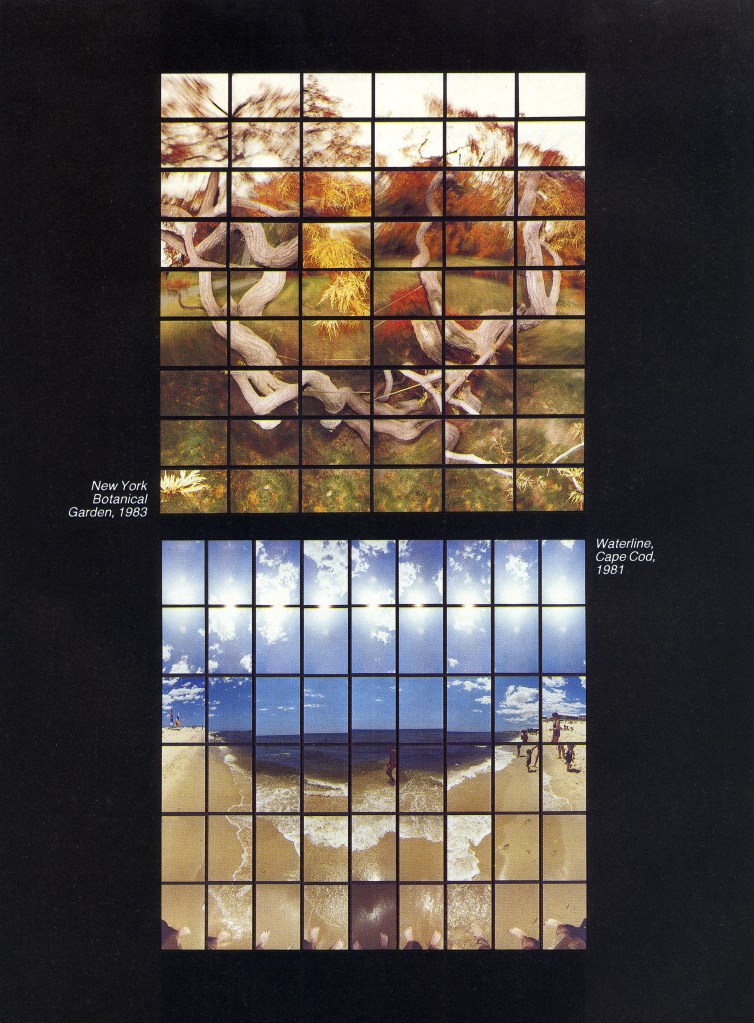
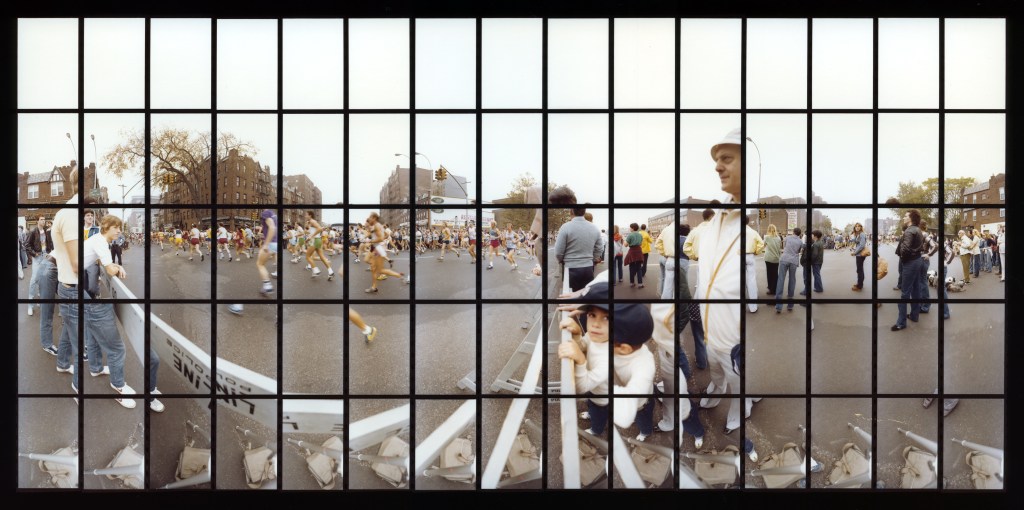
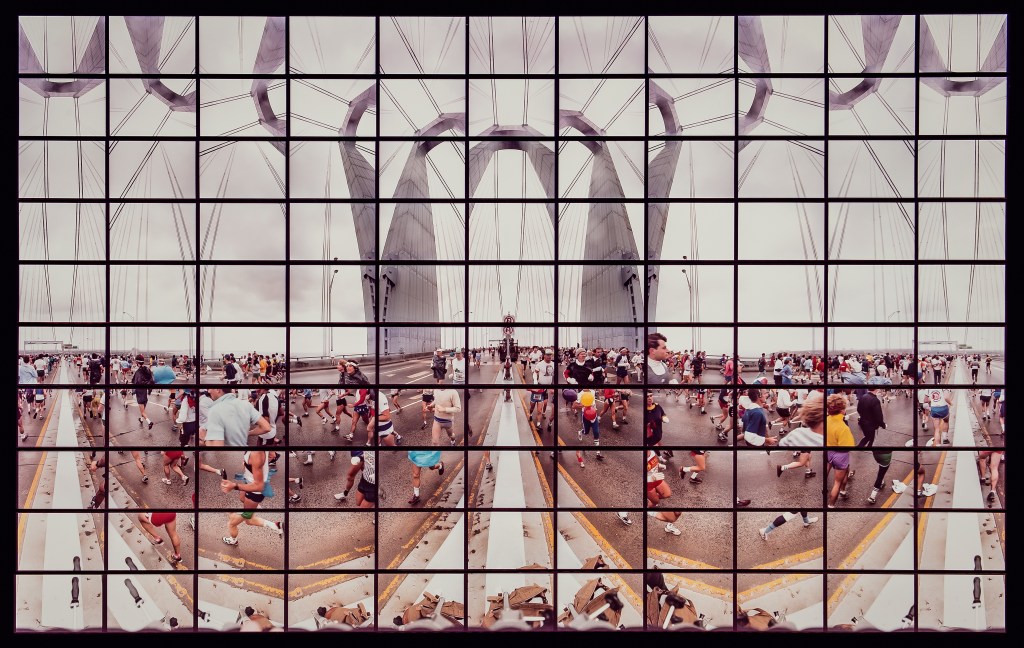
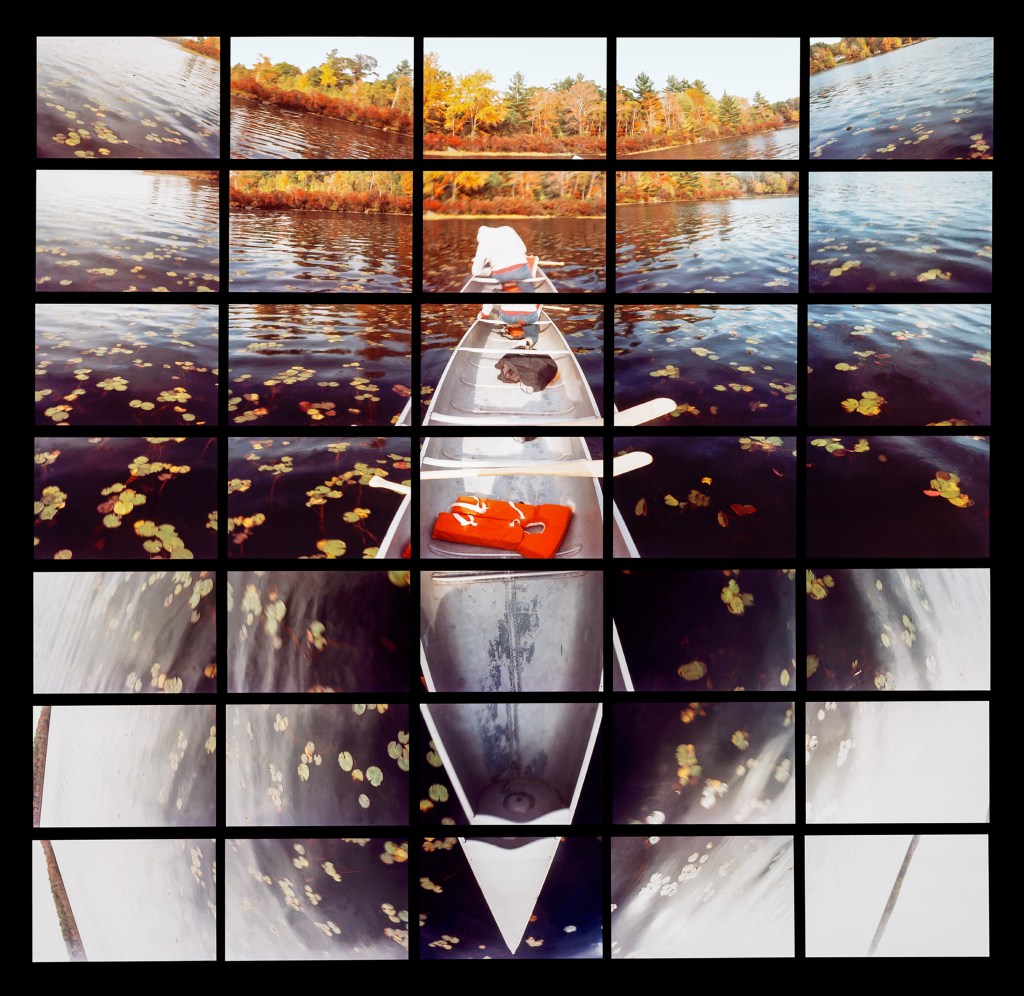
Being a card carrying subscriber to Popular Photography magazine, it was a thrill to have a portfolio of my collages published in 1985. The NYC Marathon collage from 1983 was actually the third attempt. In the Fall of 1979, a few months out of school, I hustled myself to the Verrazano bridge at the start of the Marathon, only to learn a lesson about credentials and access. I ended up picking a random spot on the route in Bay Ridge, and made the other collage seen here. In 1982 I was more prepared, but had some kind of wild exposure and processing fail. Take three was successful. I revisited the Marathon a couple of times after that, including doing a large installation piece for the ESPN Zone Restaurant in Times Square in 1999. The other published collages are from 1981 and 83, from three of my favorite photo haunts: the New York Botanical Gardens, Cape Cod, MA and Highland Lake, NY.
NYC MARATHON 1982 – 16″ X 20″ C Type Contact Print, Ed. 10JAPANESE MAPLE 1983 – 11″ X 14″ C Type Contact Print, Ed. 10SHORELINE, CAPE COD 1981 – 11″ X 14″ C Type Contact Print, Ed. 10CANOE, HIGHLAND LAKE 1983 – 11″ X 14″ C Type Contact Print, Ed. 10MARATHON 1984ESPN ZONE INSTALLATION A
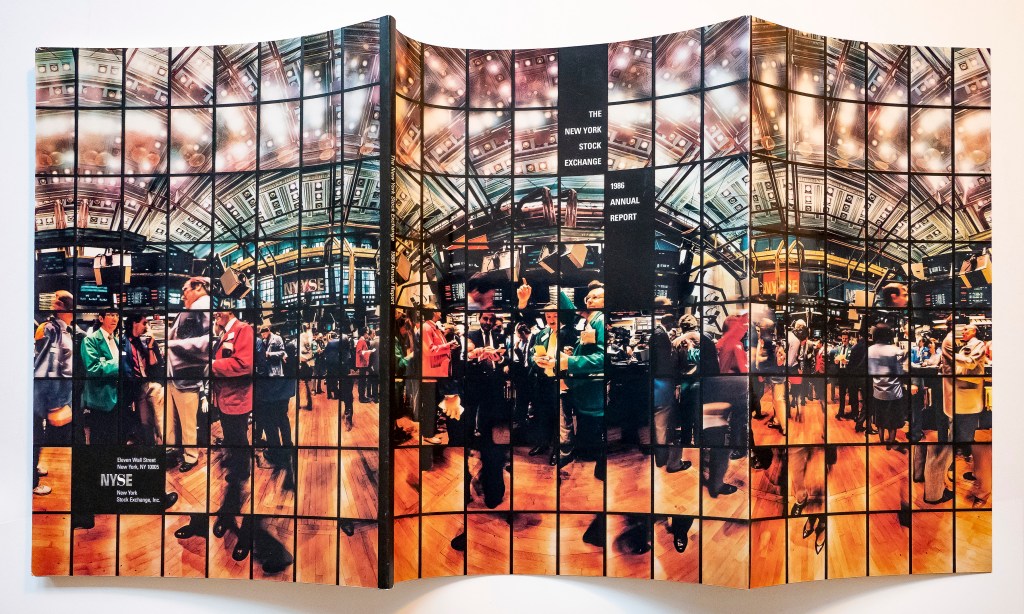
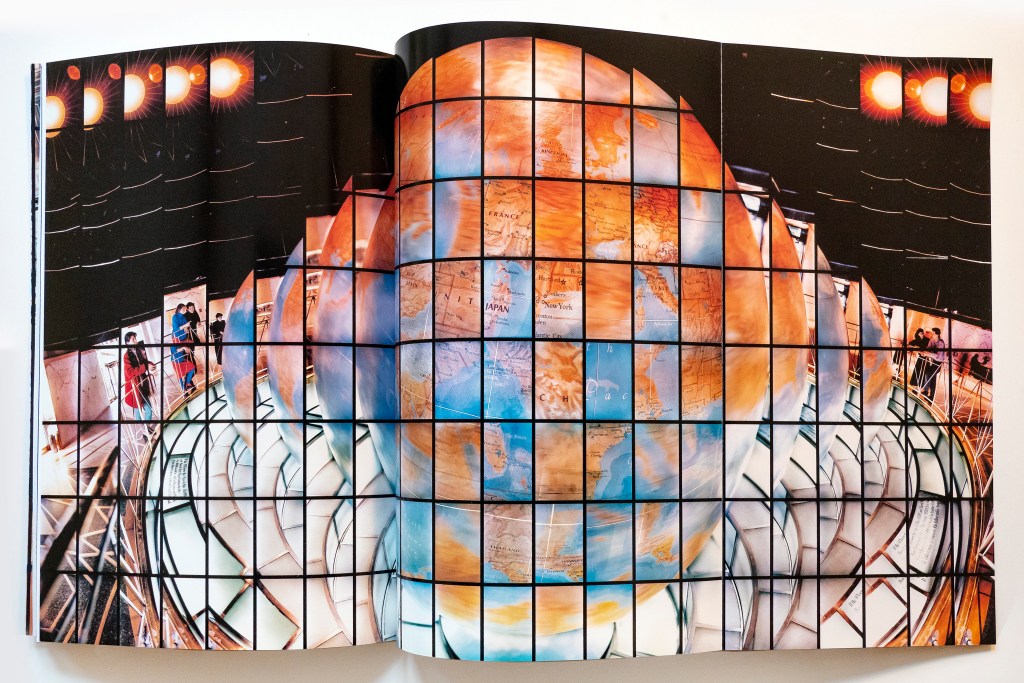
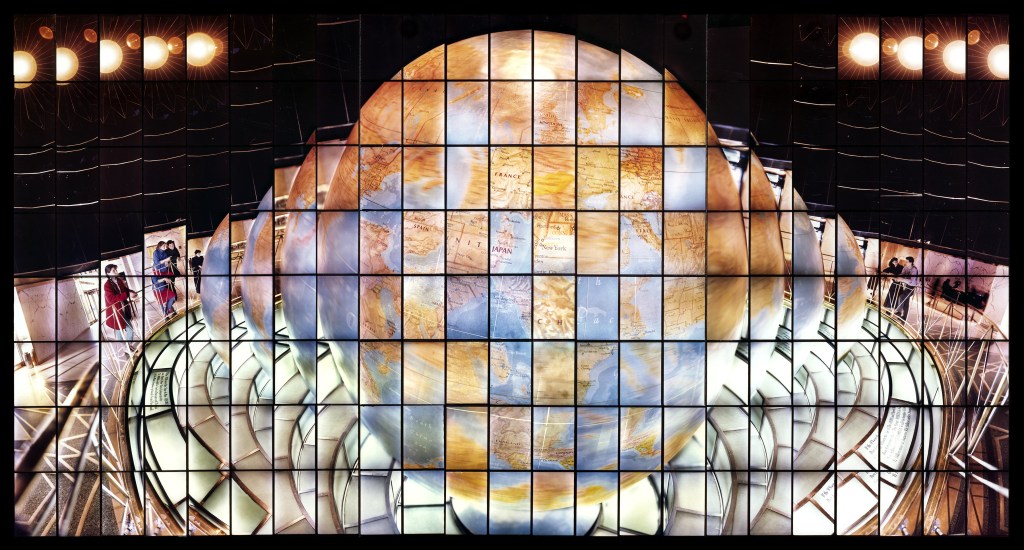
I was still working nights as a waiter in 1986-7 while plying my photo-craft during the days. I was happily straddling making my fine art while trying to get some high profile jobs with my collage style. The NYSE Annual Report was a big break. Ever grateful to Alisa Zamir at the corporate design firm of Taylor & Ives for taking a chance on me, because really I had no business being there(!) These collages, though made of hundreds of frames, are really a one-shot experience; there is virtually no opportunity for screw-ups. I would calculate one exposure setting for all the film, and if it was under or over exposed, it could result in a wipeout. There was no second exposure. Same is true for any people/activity in any frame; you get what you get. Basically I got lucky. I did have an opportunity to do a test of (my first) daytime to nighttime transition collage, which was fortunate because my original concept did not work. In the globe photo collage (photographed in the glorious Art-Deco lobby of the Daily News Building on East 42nd Street, NYC) I handily peopled it with my dear friends Jerald Frampton, Laura Salmon, Francine Fleischer, and Paula Kelly. (Thanks for not blinking everybody). The floor of the Stock Exchange was absolute madness, with traders on more than one occasion almost knocking me over as they ran. It all worked out well, NYSE loved it, and I thought to myself: ‘Damn I’m set! Can’t wait to do next years report!’ Then…. CRASH. All of a sudden the glorious extravagant production of the 86 Annual Report was landing on the freshly humbled desks of a crashed 87 economy…. ‘So, um, what about next year? I asked sheepishly.’ ‘Dave, I don’t even think we are going to use photography and may just do it on newsprint. Extravagance is out, spartan restraint is in….’ Something like that. Funny thing is, Annual Reports do not really have to be anything but numbers on newsprint, they evolved in quality and style in a kind of vain design arms race between corporations, creating a new economy for artists, designers and photographers. Thank God. As the recession receded I branched out I got more similar work, but wow, what an unexpected start!
DOWNTOWN PANORAMA – Photo contact print – Client: New York Stock Exchange
Nullland is a series of manipulated still images I produced during the COVID era. They were created to evoke feelings about the quarantine moment and alienation in general. Here are two video works created from the images:
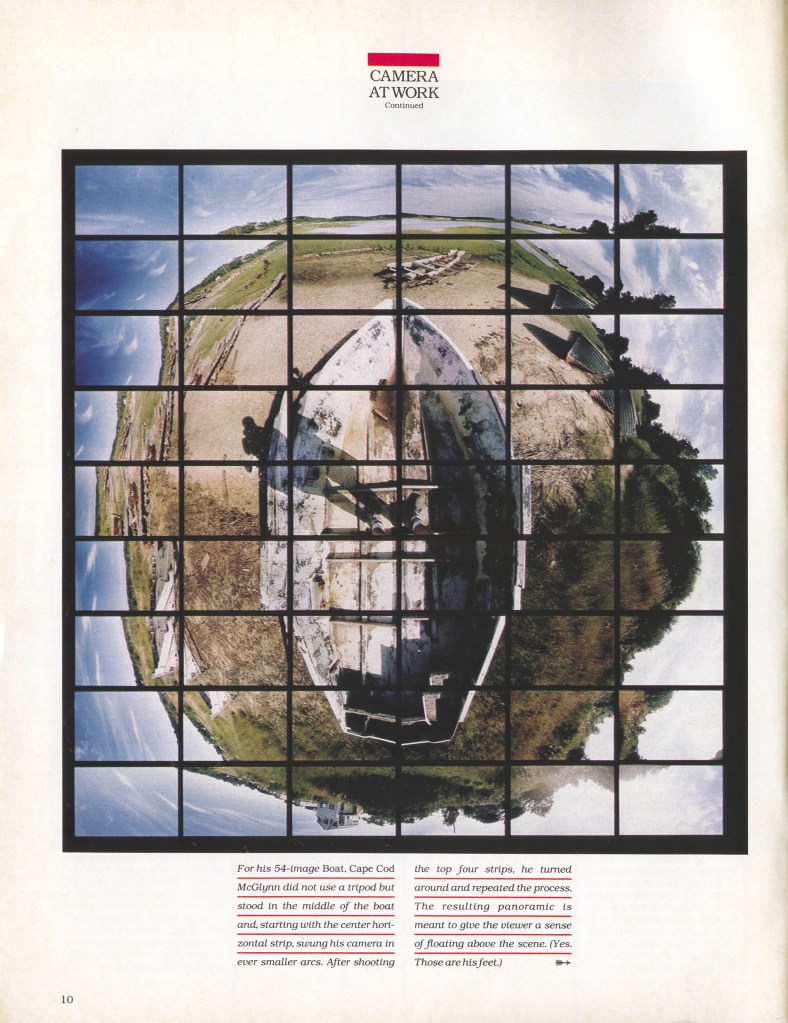
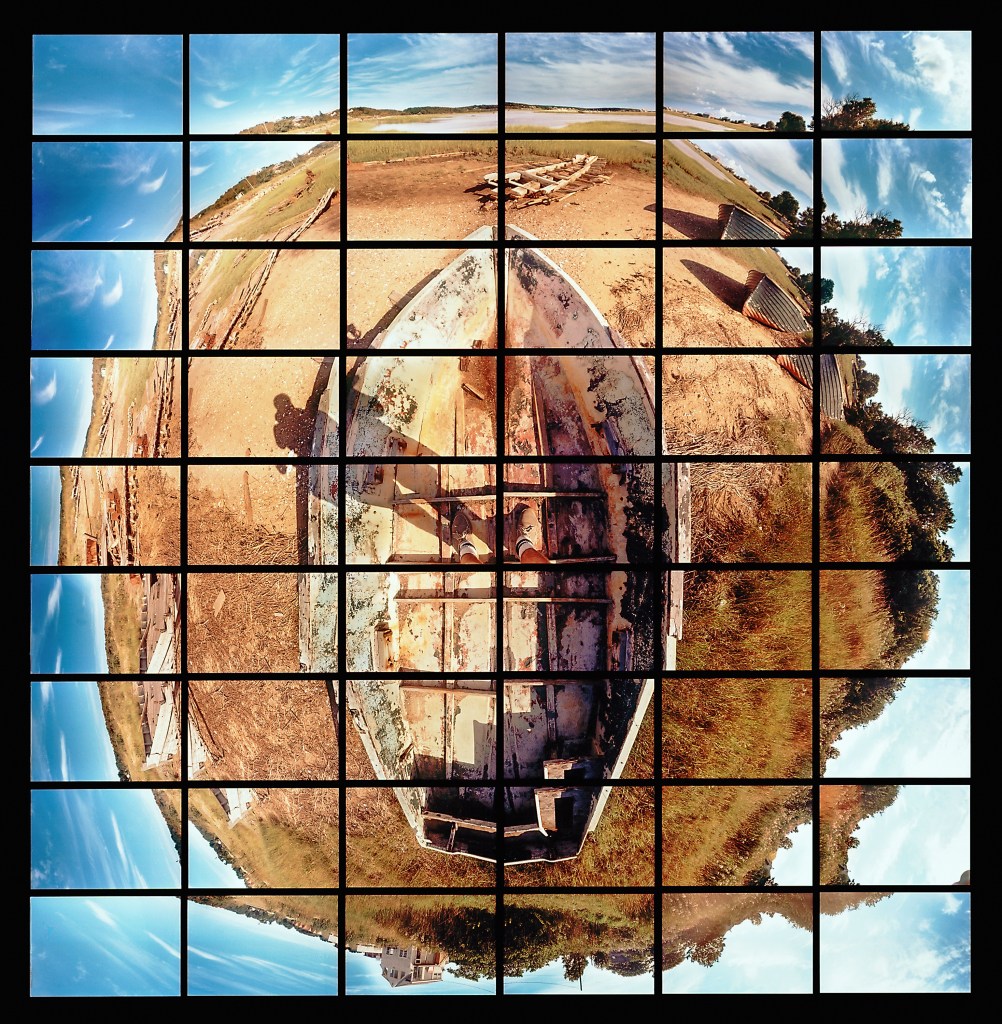
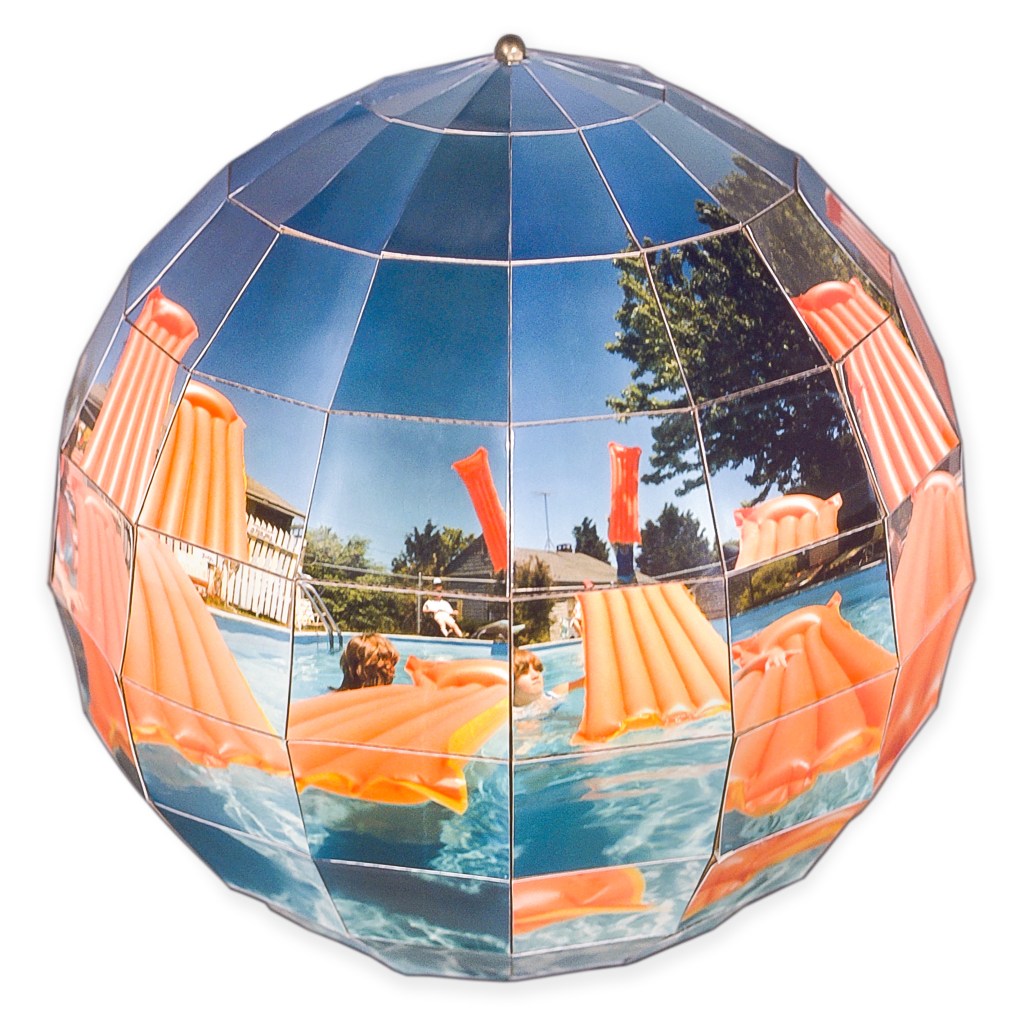
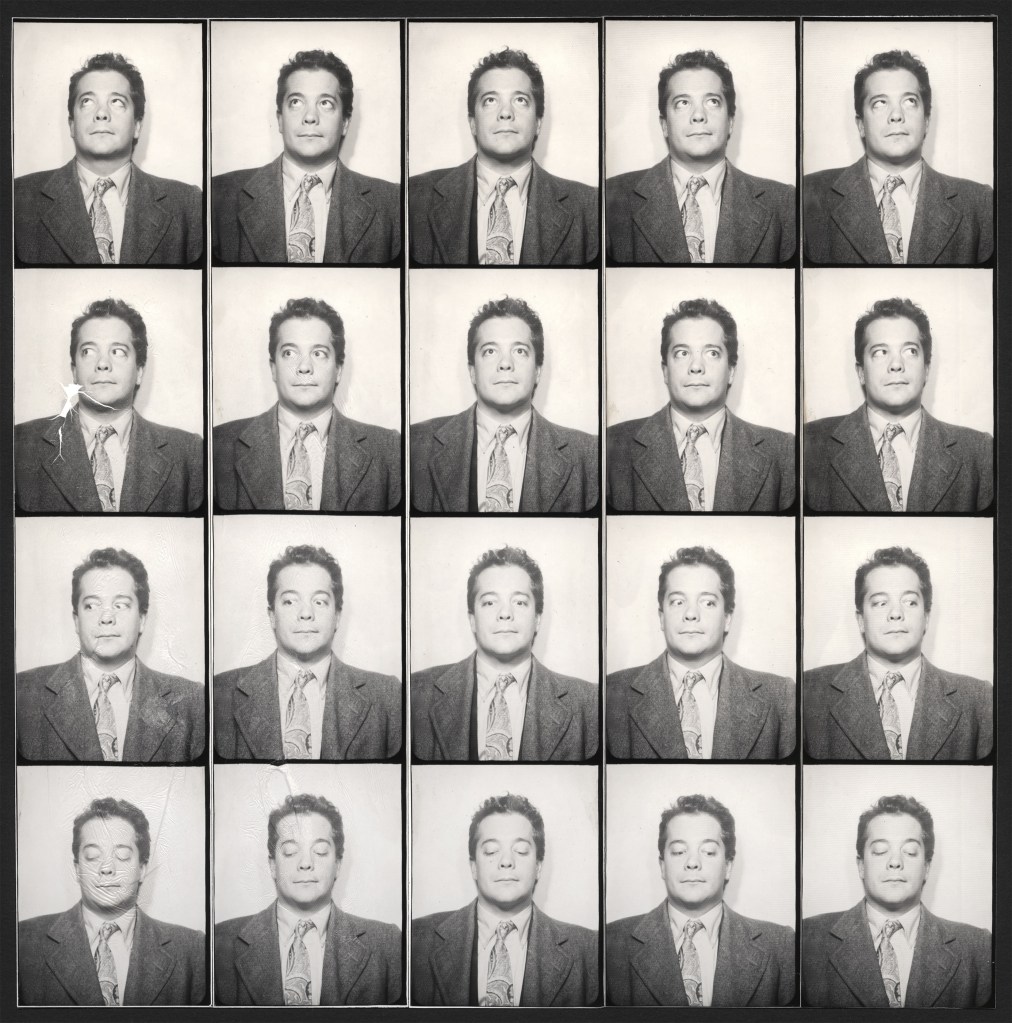
By the time I wandered into the offices of Time/Life on 6th avenue in 1983, I had produced ay least a few dozen of my contact print photo collages. I had work in a few different shows, including two solo shows in 1983, and I was always walking my portfolio around. My work caught the attention of John Loengard and Bob Ciano, who put a portfolio spread into the ‘Camera At Work’ section. It was a big deal for me, and I awaited anxiously that Summer for the issue to hit the newsstands. When it did, the first thing I thought was: WTF is Willie Nelson doing on the cover of MY LIFE magazine? Why not Elvis Costello or something?? And why in Gods name did they set up the spread with the Boat collage across from that crass yellow weight-loss ad? And why the subscription card there?? And who printed this this thing anyway, it’s all dark and plugged up! It was my initiation into a lifetime of seeing my precious work get mangled in printing. Ahh, but I digress. It really was a great experience. My parents, my father: “That’s my boy! That’s my son, in LIFE magazine!”. It was a big deal for those of their era. I think they paid an honorarium type fee of a few hundred dollars, but when they lost the original art to my ‘Photo Booth Collage’ (see alternate below) they forked over $1,500 which was the going rate for lost original photography art. My mother couldn’t wrap her head around this valuation. “$1,500 for a few photo booth photographs??” Anyway these three images were some of my more popular at the time. The Shea Stadium picture was done on a not-so-well-attended fan appreciation day. Paula, Francine and Jerald were with me, and if you look carefully you’ll see how I had them move around to fill the empty seats. Some part of Paula is visible in each of the 15 strips making up the 360°. The Boat collage has been in many a show since, and the Pool collage, made in 1979 at the shallow end of the pool with my sister Tracy as the de-facto assistant/model, was made into a 3D sphere for another later show. As it turns out, my work was a precursor to VR, and I eventually converted a handful of these into VR environments a few years ago.
SHEA STADIUM 1982 – 16″ X 20″ C Type Contact Print, Ed. 10BOAT, CAPE COD 1981 – 11″ X 14″ C Type Contact Print, Ed. 10POOL CAPE COD 1979 – 16″ X 20″ C Type Contact Print, Ed. 10POOL, CAPE COD SPHERE 1979-1982
Back in the Spring of 1979, while still at school at SUNY Purchase College, the school got a call from Xerox in neighboring Stamford CT to see if there were any student photographers around willing to photograph the festivities at their Open House Day picnic. Chris, Jim and myself (the Troika) were chosen. I had just completed my first ‘composite panoramic collage’ and was ready to sell it to the world. The powers that be granted me permission to shoot this collage while there. I subsequently sent them a copy and they published it it in this ‘Xerox World’ newsletter in July 79, and paid me a whopping $250 for the privilege. In the few frames of the 150 where people can be reasonably photographed, Chris and I had the opportunity to get a shot with the de-facto Xerox mascot at the time ‘Brother Dominic’, actor Jack Eagle who famously appeared in Xerox TV ads as a monk. Apart from all that, why this publication is important to me is, well, it was a genuine big-league first for me, plus it anchored in the timeline my status as a ‘first monkey’ of photo collage.
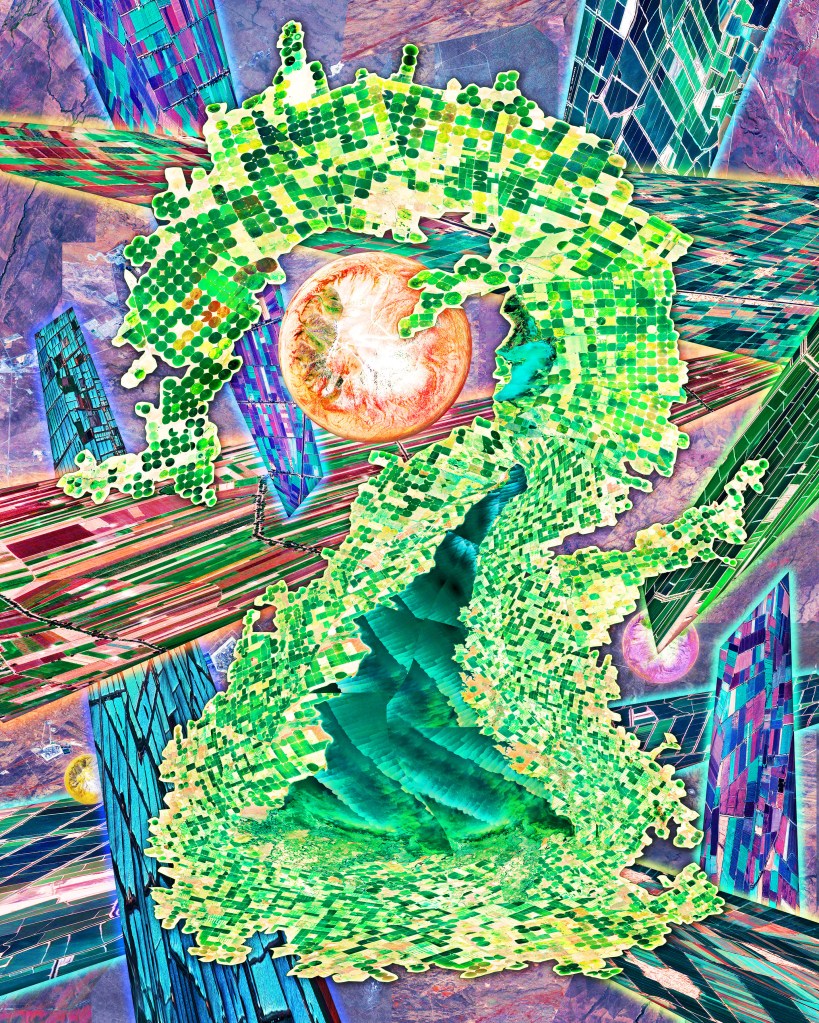
‘LACUNA’ is the 8th in a series of digital photo collages I’ve been working on this February. These collages are made from dozens/hundreds of screenshots of the Google Earth app, at various locations around the globe. This is an Idaho and Egypt mash-up.



























 David McGlynn